


Page 265 - New Medley 5 Semester 1
P. 265
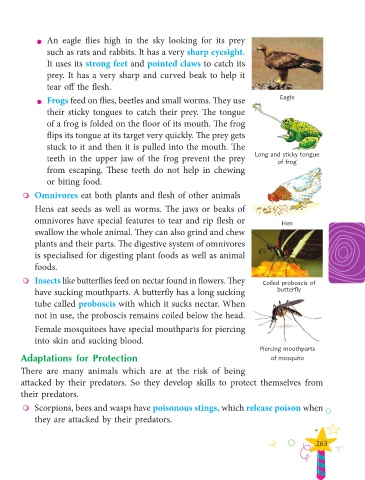
l An eagle flies high in the sky looking for its prey
such as rats and rabbits. It has a very sharp eyesight.
It uses its strong feet and pointed claws to catch its
prey. It has a very sharp and curved beak to help it
tear off the flesh.
l Frogs feed on flies, beetles and small worms. They use Eagle
their sticky tongues to catch their prey. The tongue
of a frog is folded on the floor of its mouth. The frog
flips its tongue at its target very quickly. The prey gets
stuck to it and then it is pulled into the mouth. The
teeth in the upper jaw of the frog prevent the prey Long and sticky tongue
of frog
from escaping. These teeth do not help in chewing
or biting food.
Omnivores eat both plants and flesh of other animals
Hens eat seeds as well as worms. The jaws or beaks of
omnivores have special features to tear and rip flesh or Hen
swallow the whole animal. They can also grind and chew
plants and their parts. The digestive system of omnivores
is specialised for digesting plant foods as well as animal
foods.
Insects like butterflies feed on nectar found in flowers. They Coiled proboscis of
have sucking mouthparts. A butterfly has a long sucking butterfly
tube called proboscis with which it sucks nectar. When
not in use, the proboscis remains coiled below the head.
Female mosquitoes have special mouthparts for piercing
into skin and sucking blood.
Piercing mouthparts
Adaptations for Protection of mosquito
There are many animals which are at the risk of being
attacked by their predators. So they develop skills to protect themselves from
their predators.
Scorpions, bees and wasps have poisonous stings, which release poison when
they are attacked by their predators.
263

